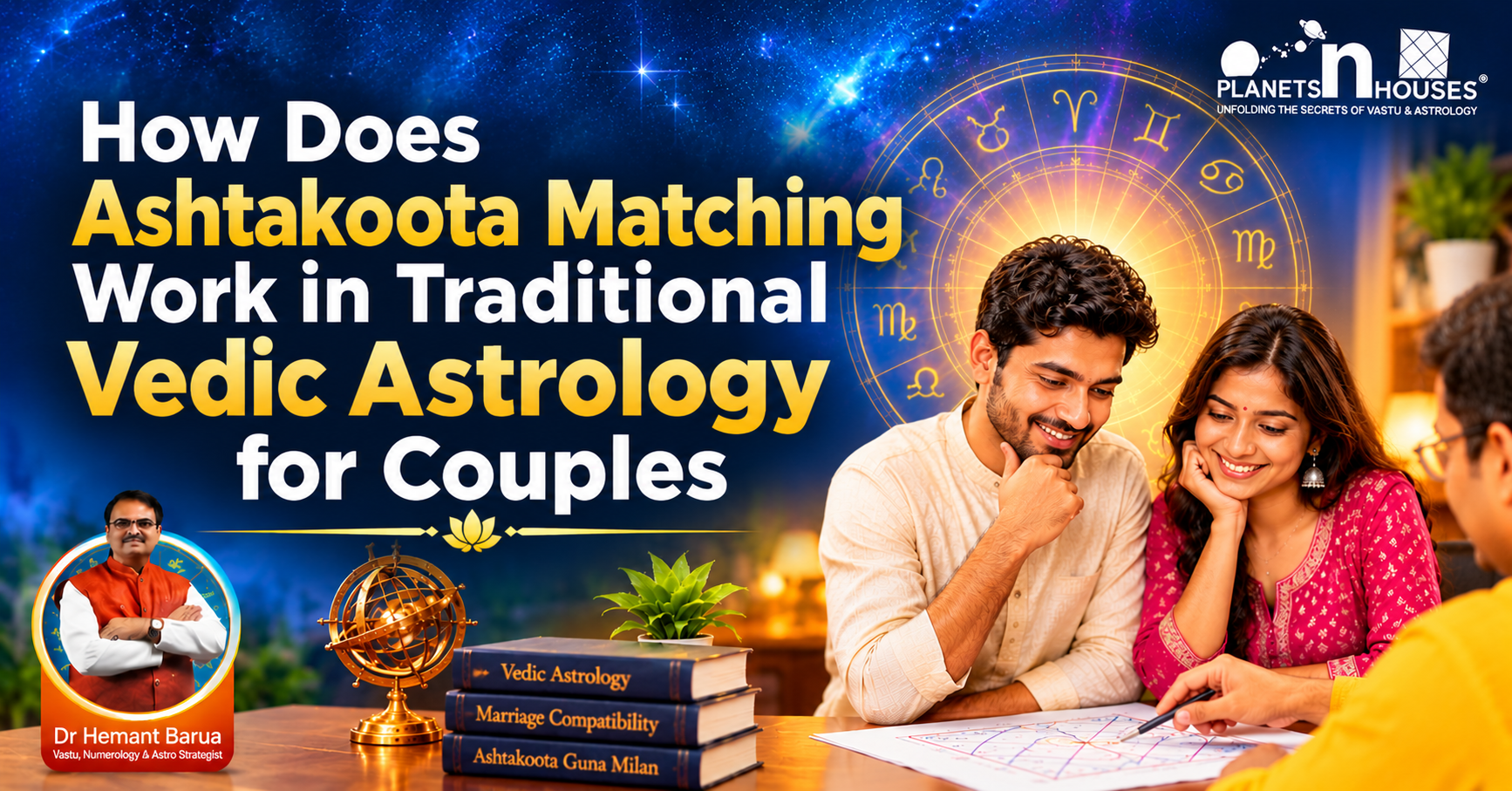
Marriage is an important decision that involves emotional understanding, family values, compatibility, and long-term expectations. In traditional Vedic astrology, Kundli matching is often performed before marriage to understand how two individuals may complement each other. One of the most widely followed methods is Ashtakoota matching, which evaluates compatibility through eight different aspects of a couple's birth charts. Couples looking for the Best Astrologer in Hyderabad often seek guidance to understand this traditional system and its role in marriage decisions. At Planets N Houses, the approach to Vedic astrology focuses on examining different planetary factors to provide a broader understanding of individual and relationship-related matters.
Ashtakoota matching is a traditional Kundli compatibility method used in Vedic astrology to assess the astrological compatibility of two individuals before marriage. The word Ashtakoota refers to eight categories, known as Kootas, that are examined during the matching process. The system generally uses the Moon signs (Rashis) and birth Nakshatras of both individuals to calculate compatibility points. Each Koota represents a particular area of compatibility, such as temperament, emotional understanding, attraction, friendship, and family-related considerations.
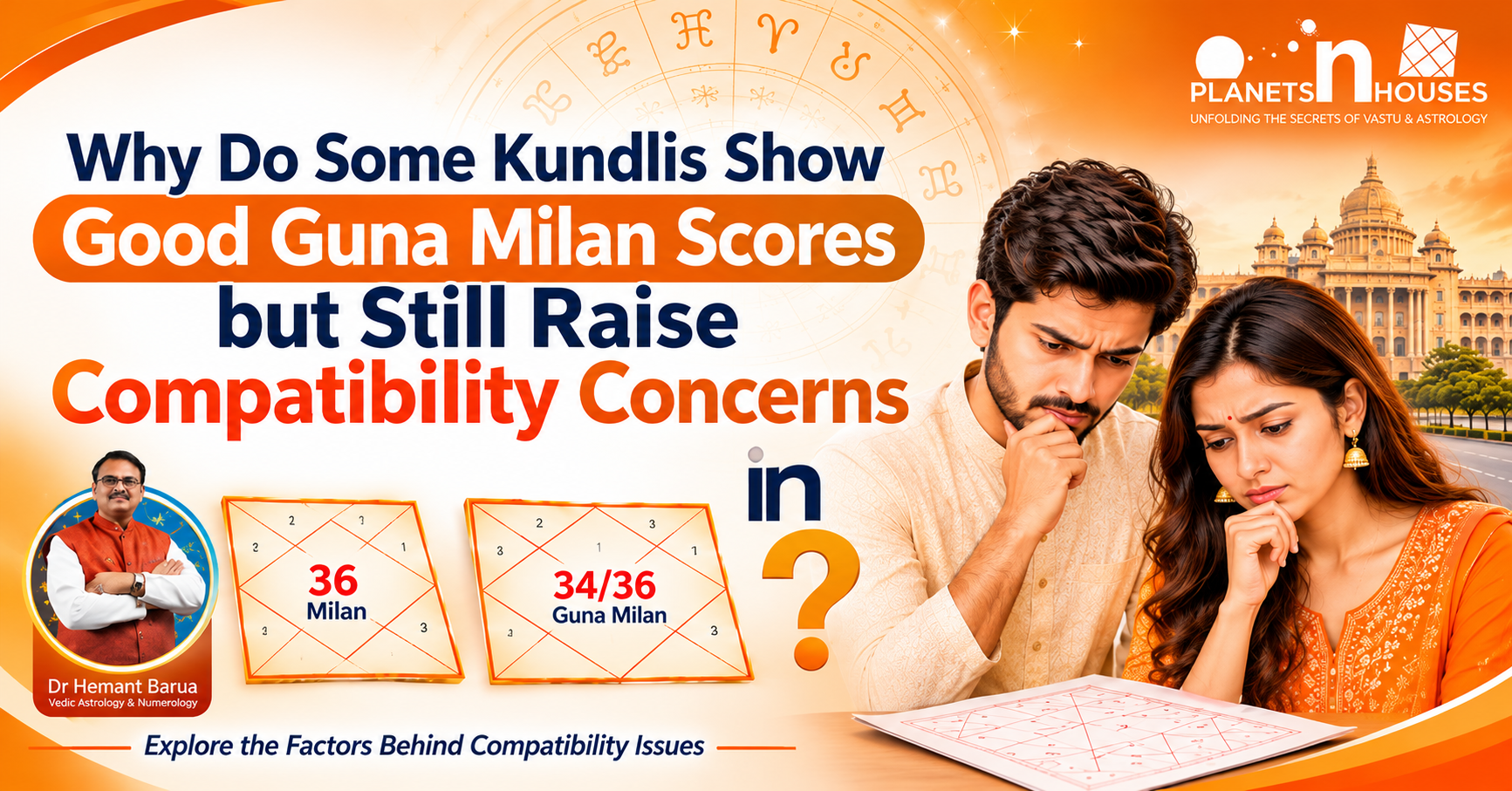
All these eight Kootas together have a total score of 36 Gunas. That is why the system is referred to as the 36 Guna Milan technique as well. A higher score is generally taken as better, but just having a high score does not mean that the marriage will definitely work. There are other planetary combinations as well as Kundli to be taken into account. In the case of marriages in Hyderabad, all these things can help a couple be more aware of their compatibility in marriage.
In the Ashtakoota system, weight is assigned to eight Kootas. In this system, each Koota evaluates a unique dimension of the match, and the marks scored in all eight areas are totalled to come up with the overall mark. Below are the eight Kootas:
Koota |
Maximum Points |
What It Examines |
|
Varna |
1 |
Traditional spiritual and personal compatibility |
|
Vashya |
2 |
Mutual influence and interpersonal understanding |
|
Tara |
3 |
Birth star compatibility and traditional well-being indicators |
|
Yoni |
4 |
Physical compatibility and natural attraction |
|
Graha Maitri |
5 |
Mental compatibility and planetary friendship |
|
Gana |
6 |
Temperament and behavioural compatibility |
|
Bhakoot |
7 |
Emotional, family, and relationship-related considerations |
|
Nadi |
8 |
Traditional health and hereditary compatibility considerations |
|
Total |
36 |
Overall Guna Milan score |
Each classification plays a different role in achieving the score. In some instances, factors revolve around temperament and mental awareness, while other factors center on traditional signs of attraction and emotions within the family. The reason for conducting such an analysis is to determine similarities and areas in which there may be differences.
Varna Koota carries one point in the Ashtakoota system. It traditionally evaluates the spiritual and personal compatibility of two individuals based on their Moon signs. The classification is based on four traditional Varnas. This factor is interpreted within the traditional astrological framework and should not be treated as a measure of an individual's social worth, character, or abilities. Although it contributes the smallest number of points, it forms part of the overall compatibility assessment.
Vashya Koota comes with two points, and this aspect checks the conventional connection between the signs of the Moon of the would-be partners. This factor denotes a relationship with mutual impact, cooperation, and understanding. This good score of Vashya is regarded as positive when it comes to adjustment and harmony. As far as couples getting prepared for marriage are concerned, this is one component of interaction.
Dina Koota is another name for Tara Koota, and it carries three points. This matching factor assesses the connection between the Nakshatras of the two people involved. It makes use of their respective birth stars and analyses certain traditional signs that indicate good health, fortune, and compatibility. This factor is very significant since the Nakshatras play an essential role in Vedic astrology. But its assessment should not be made in isolation.
The Yoni Koota scores 4 points and is usually linked with sexual attraction and the chemistry between two people. There is an animal classification for every Nakshatra. The connection between the animal classifications determines the degree of compatibility within this category. A good rating is usually thought to promote physical compatibility. Nonetheless, real-life relationship success requires respect, communication, comfort, and understanding as well.
The Graha Maitri aspect has a total weightage of five and deals with the relationship between the planets that rule the Moon houses. It is generally connected with understanding, communication, shared thoughts, and having the capability to sustain a supportive connection. If the relationship of the planets is favorable, then the aspect as a whole becomes good for cooperative interaction.
Gana Koota has six points and determines the nature of both persons by means of their respective Birth Nakshatras. The three Ganas are:
The matching process examines the relationship between these classifications. Differences do not automatically indicate an unsuccessful marriage. Their significance depends on the complete astrological assessment.
The Bhakoot Koota involves 7 points that focus on the connection between the signs of the Moon of both parties involved. Some of the sign combinations will prove to be favorable, whereas some others might reveal the presence of the Bhakoot Dosha. The Bhakoot Koota deals with emotions, relationships within the family, financial security, and stability within the marriage. But there are certain things that must be kept in mind regarding Bhakoot Dosha.
The most important element of the eight-point scale is the Nadi Koota, which consists of eight points. Under this category, Nakshatra gets categorized into three Nadis: Adi, Madhya, and Antya. If both of the couples are in the same Nadi, there can be Nadi Dosha as per the rules of Kundli Matching. This is one of the aspects that are looked at in great detail in Kundli Milans. The existence of Nadi Dosha does not necessarily mean that a marriage proposal has to be declined. There can be many other considerations in traditional astrology.
The total Ashtakoota score is calculated out of 36 Gunas. Traditionally, a score of 18 or above is generally considered the minimum acceptable benchmark in many Kundli matching practices. The commonly followed score ranges are:
Guna Score |
Traditional Interpretation |
|
Below 18 |
Generally considered less favourable |
|
18–24 |
Traditionally considered acceptable |
|
25–32 |
Generally considered favourable |
|
33–36 |
Considered highly favourable under the scoring system |
These ranges provide a general reference rather than a guaranteed prediction of marital success. For example, a couple may receive 28 Gunas, which is traditionally considered a favourable score. However, if certain important planetary combinations require attention, an astrologer may recommend examining those factors before drawing a conclusion.
Similarly, a score below 18 does not automatically establish that two individuals are incompatible. The complete birth charts, relevant Doshas, possible cancellation conditions, and planetary strengths should also be evaluated.
Many pairs give due consideration to the final Guna count while matching their kundalis. However, there are other planetary considerations in Vedic astrology that have significance to the total analysis of the situation. Kundli matching through these factors may be accomplished as follows:
It is helpful for couples in Hyderabad, who want to know about their compatibility in a way which does not just depend on numbers. It also makes sure that individual planets are not ignored while matching couples.
Ashtakoota matching involves more than calculating eight categories and adding their scores. Accurate birth details, correct Nakshatra identification, planetary relationships, and traditional interpretation all play an important role. Couples searching for the Best Astrologer in Hyderabad should look for guidance that considers the complete birth charts rather than offering conclusions based only on the 36 Guna score.
A knowledgeable Vedic astrologer can help explain which factors are favourable, where potential differences appear, and whether specific Doshas require further examination. This allows couples and their families to understand the traditional astrological perspective without creating unnecessary fear or confusion. Those seeking guidance from the Best Vedic Astrologer in India may also consider an astrologer's experience, knowledge of traditional methods, and ability to explain complex astrological concepts in simple language.
Birth details become crucial while preparing and comparing the two Kundlis. Minor differences in birth times may have a considerable impact on the calculations in the Kundli. Usually, the below-listed details should be collected from both persons:
If the birth time is not known for sure, it is important to let this fact be known prior to the reading. The astrologer will then be able to discuss how this can impact the interpretation as well as what elements are still reliable.
Ashtakoota matching offers a structured way to examine marriage compatibility through eight traditional astrological factors, including Varna, Vashya, Tara, Yoni, Graha Maitri, Gana, Bhakoot, and Nadi. Each factor represents a different aspect of compatibility, such as emotional understanding, temperament, mutual attraction, health considerations, and long-term relationship harmony. However, a meaningful assessment should go beyond the final Guna Milan score and consider the complete Kundlis, planetary placements, Doshas, and relevant cancellation conditions. Consulting the Best Vedic Astrologer in India can help couples gain a deeper understanding of these astrological factors and their possible influence on married life. This broader approach helps couples understand both the favourable aspects and potential challenges indicated in their birth charts before making important marriage decisions.
Dr. Hemant Barua, a Vedic Astrologer and Researcher with over 28 years of experience, provides detailed guidance on marriage compatibility and other important life matters through traditional Vedic astrology. Through Planets N Houses, he uses traditional astrological methods to help individuals understand their Kundli findings, relationship prospects, and potential compatibility challenges. Couples in Hyderabad who want to understand their Guna Milan results, examine possible compatibility concerns, or seek a broader Kundli compatibility assessment can explore a personalised consultation.
Ashtakoota matching is a traditional Kundli compatibility method that evaluates eight different factors to understand the astrological compatibility of two individuals before marriage. It uses their Moon signs and birth Nakshatras to calculate a score out of 36 Gunas.
Traditionally, a score of 18 or above out of 36 is considered an acceptable benchmark for marriage compatibility. However, the final interpretation also depends on planetary placements, Manglik Dosha, Bhakoot, Nadi, and other factors in both birth charts.
Yes, Nadi Dosha does not automatically mean that a marriage should be rejected. Traditional Vedic astrology considers specific planetary combinations, exceptions, and cancellation conditions before determining its significance.
No, Ashtakoota matching is only one part of traditional Kundli analysis. An astrologer may also examine the seventh house, Venus, Jupiter, Manglik Dosha, planetary periods, and other relevant combinations to understand overall compatibility.
The date of birth, accurate time of birth, and place of birth of both individuals are generally required. These details help prepare their birth charts and calculate the eight compatibility factors used in the matching process
Written by : Hemant Barua
Book a telephonic consultation today.

Hemant Barua is one of the top astrologers in India who has vast experience in teaching astrology and also with giving astrological consultancy. While making predictions he also combines System-Based Vedic Astrology with modern astrology. Divisional charts, Ashtakvarga, deep and logical calculations of horoscpe , classic references are the basics of his astrological predictions. His...
Read More
Ask any number of Questions Related to any area of your life, like Business, Job, Love Relationship, Foreign Settlement, Marriage, Children, Health, Wealth etc.
(Duration : 30 Minutes and No Question Limit)
Zoom Video Call, Whatsapp Audio Call.

A prefect option to check the Compatibility and Harmony between the the couple. A good score of Ashta Guna is not enough.
(Duration : 30 Minutes and No Question Limit)
Zoom Video Call, Whatsapp Audio Call.